Is the Opus 2M2 the Last Soundbar You’ll Ever Buy? A Deep Dive Review
We have all lived through the modern television paradox: you invest weeks into researching the perfect OLED display, mount it with precision, and settle in for a breathtaking 4K cinematic experience. Yet, the moment the opening action sequence hits, the illusion shatters. The audio sounds thin, tinny, and hollow, failing to match the visual grandeur on screen. Because today's TVs are razor-thin, internal speakers have become an afterthought, lacking the physical volume required to move air effectively. While the traditional fix involves bulky soundbars and awkward, floor-bound subwoofers, the Opus Hi·Fi 2M2 offers a radical, sophisticated alternative that finally proves you do not need a clutter-filled room to achieve studio-grade sound.
What Is the Opus 2M2?
Opus Hi·Fi is a boutique manufacturer that has built its reputation on challenging the status quo of consumer audio. Instead of following the industry trend of mass-market, plastic-wrapped systems, they focus on precision engineering and architectural aesthetics. The 2M2 is their flagship ultra-thin soundbar, designed specifically for audiophiles and design-conscious homeowners who refuse to compromise on either form or function. It represents a paradigm shift in home theater, stripping away the need for external bass modules while maintaining a high-fidelity output that rivals much larger setups.
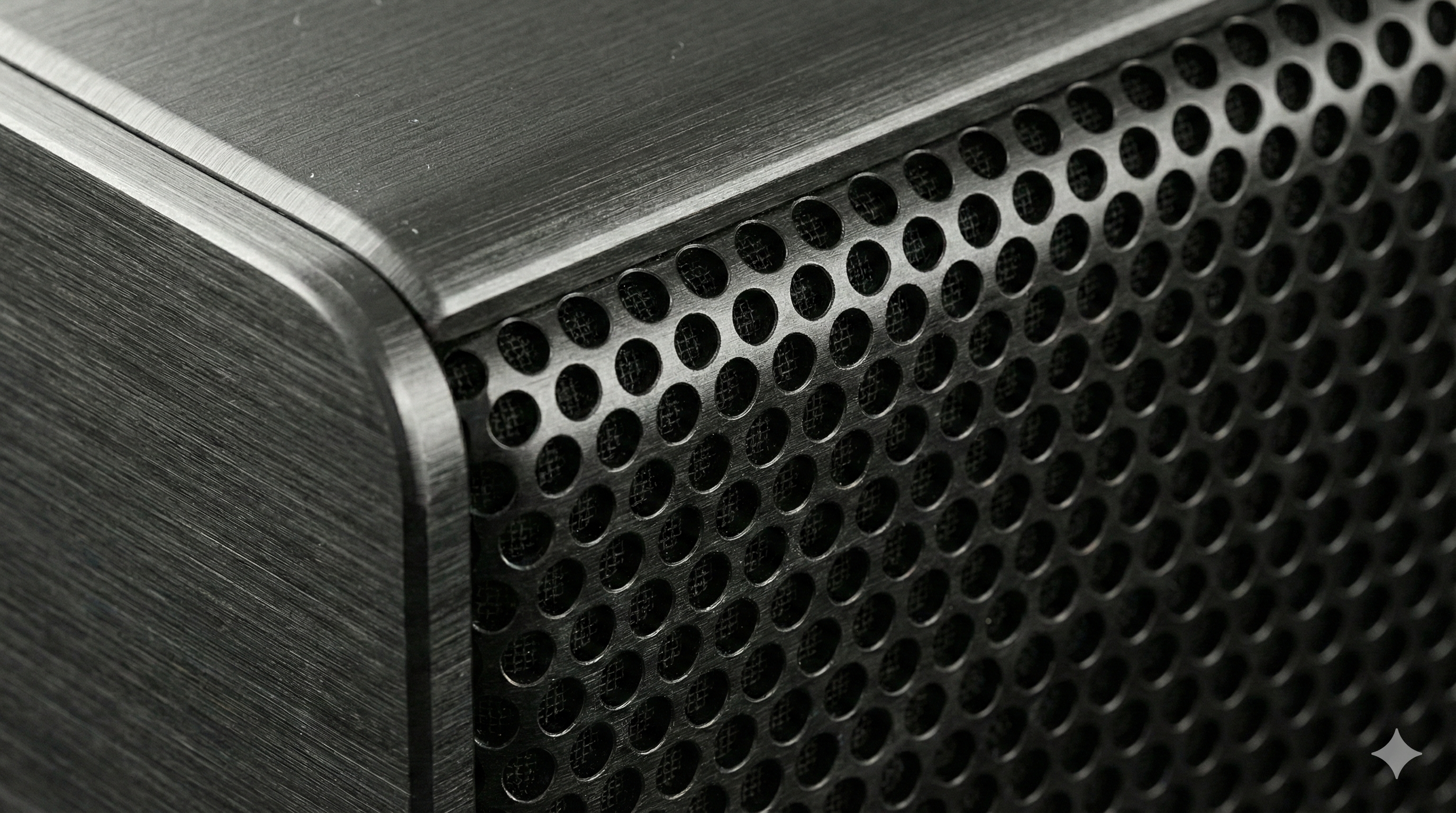
At its core, the 2M2 is an exercise in acoustic maximization. By utilizing a high-density, aircraft-grade aluminum chassis, Opus has managed to house a complex array of drivers and high-power amplification within a profile that is barely two inches tall. It is intended to be the definitive, single-purchase audio upgrade for your living room, serving as a masterclass in how to deliver a full-range, immersive soundstage without disrupting the clean lines of your entertainment center.
Key Features & Specifications
- Chassis Material: Precision-milled, single-piece aircraft aluminum
- Driver Array: 17 custom neodymium drivers (9x full-range aluminum drivers, 8x long-throw subwoofers)
- Power Output: 1000W peak power amplification
- Processing: Quad-Core ARM Cortex-A53 processor with integrated 24-bit/96kHz DAC
- Connectivity: HDMI eARC, Optical Toslink, Bluetooth 5.0, dual-band Wi-Fi
- Audio Formats: Dolby Atmos, DTS:X, Dolby TrueHD, and high-res FLAC/WAV playback
- Dimensions: 42.5 inches Wide x 2.1 inches High x 3.2 inches Deep
- Mounting: Included low-profile wall-mount bracket and tabletop isolation feet
Real-World Performance
Living with the Opus 2M2 has fundamentally changed my expectations for what a single-enclosure system can achieve. In daily use, the integration is effortless. Because there is no external subwoofer to hide behind a couch or tuck into a corner, my living room remained entirely free of cable clutter and giant, unsightly black boxes. When I first fired up the desert sandstorm sequence in Dune, the 1000W peak power made its presence known immediately. The physical impact of the bass was genuinely shocking for a bar barely two inches high; it delivered a deep, tactile rumble that I could feel in my chest without a dedicated sub.
Gaming performance was equally impressive. Playing high-fidelity titles, the 2M2 provided a level of spatial awareness that is usually reserved for complex surround sound systems. Footsteps and environmental cues were pinpoint-accurate, and the transition between dialogue and explosive combat felt seamless. For music playback, the 2M2 sheds the "soundbar" label and behaves more like a high-end bookshelf speaker pair. Vocals are crisp, centered, and rich, while the mid-range has a warmth that prevents the sound from feeling clinical or fatiguing during long listening sessions.
Image/Sound Quality Deep Dive
The secret to the 2M2’s performance lies in its proprietary DSP and the strategic placement of its 17-driver array. By utilizing a Quad-Core ARM Cortex-A53 processor, the soundbar performs real-time room correction, analyzing the acoustic signature of your space to ensure that the soundstage remains wide and immersive despite the compact enclosure. The 24-bit/96kHz DAC ensures that high-resolution audio files are reproduced with surgical precision, capturing subtle textures in the high end that lesser soundbars simply smear into noise.
The low-end management is perhaps the most impressive technical feat. The eight long-throw subwoofers are tuned to interact with the aluminum chassis to minimize resonance and distortion. Instead of relying on a port that might introduce "chuffing" or muddiness, the system uses sealed-box physics to keep the bass tight and punchy. The result is a sound profile that is remarkably balanced; it doesn’t just get loud—it stays composed, maintaining clarity even when the volume is pushed to near-reference levels.
Setup & Ease of Use
Unboxing the 2M2 feels like opening a luxury timepiece; the build quality of the aluminum chassis is immediately apparent. Setup is straightforward, primarily revolving around the HDMI eARC connection. Once connected to my television, the system was recognized instantly, allowing me to control volume and power directly through my TV remote. The accompanying app is intuitive, providing access to EQ presets and network settings without burying the user in unnecessary sub-menus.
For those who prefer a wall-mounted setup, the included bracket is low-profile and secure, keeping the bar flush against the wall. The tabletop feet are equally well-designed, featuring vibration-dampening material that prevents unwanted rattling on glass or wood surfaces. Within ten minutes of taking it out of the box, I was already streaming high-res audio and running a full cinematic test, which is a welcome departure from the complex calibration processes often required by multi-component home theater systems.
Who Should Buy This?
The Opus 2M2 is the ideal solution for the design-conscious homeowner or apartment dweller who refuses to sacrifice audio quality for the sake of interior aesthetics. It is perfect for those who want a true "plug-and-play" high-end experience without the headache of managing cables, multiple power outlets, or bulky subwoofers. If you are a fan of minimalist design but find yourself underwhelmed by the audio output of your television, this is the definitive upgrade for your space.
Pros and Cons
Pros:
- Stunning, minimalist design with premium aircraft-grade aluminum construction.
- Incredible bass output from a single enclosure without the need for a separate subwoofer.
- High-fidelity audio processing that handles high-res files and immersive formats like Dolby Atmos with ease.
- Extremely simple setup process and seamless integration with existing TV remotes.
Cons:
- The lack of physical rear speakers means you won't get the same "behind-you" surround effect as a dedicated 7.1 system.
- The ultra-thin profile means the driver array is directional, requiring careful placement for the best sweet spot.
- Lacks an analog RCA input, which might frustrate users with legacy turntable setups.
Final Verdict
The Opus 2M2 is not just another soundbar; it is a sophisticated piece of audio engineering that solves the most common complaint in modern home theater. By stripping away the bloat and focusing on high-density driver arrays and advanced DSP, Opus has created a product that feels like a luxury item. While it may not provide the absolute surround-sound immersion of a complex, multi-speaker system, it offers a level of clarity, power, and elegance that is hard to find elsewhere. If you value your living room aesthetics as much as your audio quality, the 2M2 is an easy recommendation and quite possibly the last soundbar you will ever need to purchase.
See our complete soundbar buyer's guide for more expert picks and comparisons.


Comments
Post a Comment